2026-05-29
Colonoscopy Diet Guide: A Hospital Dietitian’s Definitive Rules
Prepare for your colonoscopy with a professional 3-day diet guide. Learn which foods to avoid and what to eat for a successful screening.
Hello!
This is Geomjin Gaja.
Regular colonoscopies are essential for preventing colorectal cancer and checking intestinal health.
However, the dietary restrictions can be just as painful as the bowel preparation medication (purgative) taken before the exam.
Colonoscopy: ‘Bowel Preparation’ is 90% of the result
The most frequent question patients ask at the hospital is,
‘Can I eat this?’
If the diet is not properly managed and residue remains in the intestines,
it can be difficult to detect polyps, or worse, the examination may have to be stopped and rescheduled.
Let’s take a detailed look at the 3-day colonoscopy diet guide suggested directly by a hospital dietitian.
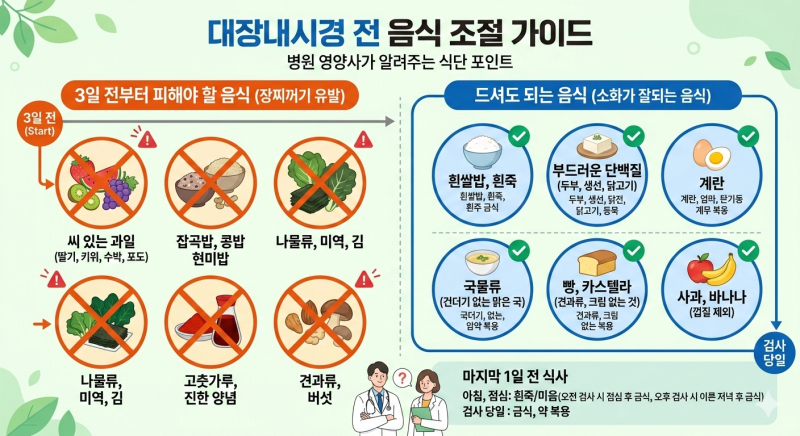
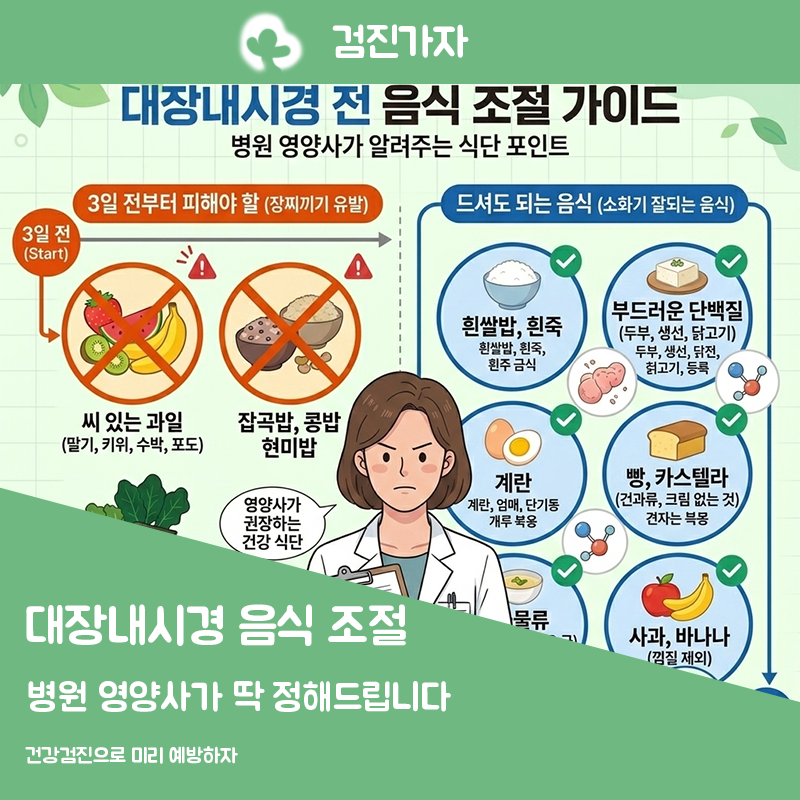
3 Days Before: Say Goodbye to Seeded Fruits and Whole Grains!
Starting three days before the exam, you must avoid foods that are difficult to digest and stay in the intestines for a long time.
Foods to Avoid
Fruits with seeds, such as kiwi, strawberry, watermelon, and grapes, are strictly prohibited.
Small seeds can get stuck between the folds of the colon and completely obstruct the endoscope’s view.
Also, avoid whole grains like brown rice, black rice, and beans, as well as kimchi, vegetables, and seaweed (laver, kelp) due to their tough fiber content.
Foods You Can Eat
Focus on soft proteins and refined carbs: white rice, potatoes, eggs, tofu, acorn jelly, clear broths, fish, and chicken.
2 Days Before: Maintain a Soft Diet
From this point, you should increase the intensity of dietary control.
Breakfast/Lunch/Dinner
Stick to white rice or white porridge as the base.
Recommended side dishes include steamed eggs, braised tofu (without red pepper powder), and clear soybean paste soup.
Snacks
Castella cake or white bread (without nuts), apples (without skin), and bananas are fine.
Milk can cause gas formation, so it is best for sensitive individuals to avoid it.
1 Day Before: The Last Meal and Fasting
This is the most important day. Your meal schedule depends on your appointment time.
For Morning Exams
Have white porridge or thin rice gruel for breakfast and lunch, and fast completely after 2:00 PM – 4:00 PM.
For Afternoon Exams
You may eat white porridge until dinner the night before, but it is safer to finish your meal early (before 6:00 PM) and begin fasting.
Precautions
For coffee, only clear Americano is allowed. Avoid lattes containing milk or dark-colored juices.
Specifically, from the night before the exam, you must not consume anything except water.
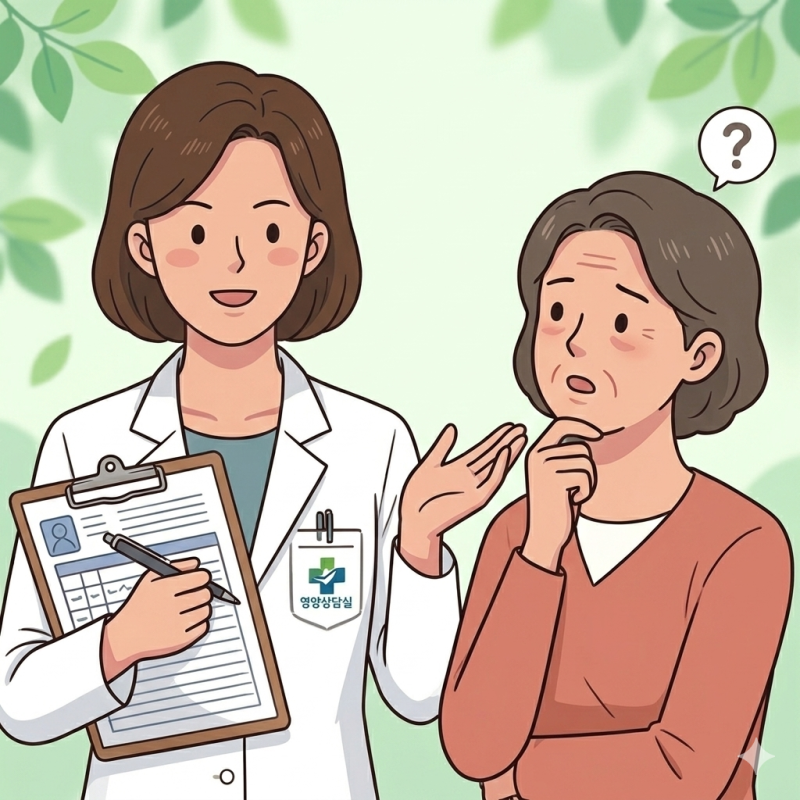
Dietitian’s Tips: ‘Can I really eat this?’ (Q&A)
Q1. Until when can I drink coffee?
One cup of clear Americano is fine until the morning of the day before the exam.
However, coffee with milk or creamer can form a film on the intestinal wall, so it should be avoided.
Q2. I really need to eat kimchi. Can I wash it first?
Red pepper powder may remain, and the fiber of the cabbage itself stays in the intestines, so it is generally not recommended.
If you absolutely must, eat only a small amount of finely chopped radish from watery kimchi (Dongchimi).
Q3. I’m so hungry. Can I have candy or gum?
Transparent candy without artificial coloring is fine.
However, gum causes you to swallow a lot of air, which can fill the stomach with gas. Avoiding it is a good way to reduce abdominal pain during the exam.
A 3-Day Promise for a Healthy Tomorrow
Managing your diet for a colonoscopy is certainly a cumbersome and difficult task.
However, compared to the trouble of having to re-test because an accurate diagnosis could not be made, a three-day period of moderation is a worthwhile investment.
Please refer to the meal plan provided by the dietitian
so that you can receive a clean and safe examination in one go.
We are rooting for your healthy gut!
▼ Gwanghye Hospital: Comprehensive Checkups including Colonoscopy ▼

▼ For Gwanghye Hospital Reservation Inquiries ▼
(Tel: 1600-2137)

▼ Curious about more Comprehensive Checkup Events? ▼

#Colonoscopy #ColonoscopyDiet
#ColonoscopyMealPlan #ColonoscopyPrecautions
#3DaysBeforeColonoscopy #DayBeforeColonoscopy
#BowelPrep #ColorectalCancerPrevention #HealthCheckup
#DietGuide #HospitalDietitian #ColonoscopyCoffee
#ColonoscopyFruit #ColonoscopyMilk
#ColonoscopyReexamination #WhitePorridge #Castella
#GutHealth #DigestibleFoods #GeomjinGaja
Frequently Asked Questions
What foods should I avoid 3 days before a colonoscopy?
Yes, you should avoid fruits with seeds, multi-grain foods, and seaweed. Seeds from kiwis, strawberries, watermelons, and grapes can get stuck in the colon's folds, obstructing the view. Additionally, multi-grains like brown rice, black rice, and beans, as well as kimchi and seaweed, contain tough dietary fibers that remain in the intestines for a long time, so their consumption should be prohibited.
Can I drink coffee before a colonoscopy?
Yes, a clear Americano is acceptable until the morning of the day before the examination. However, latte types containing milk or creamer must be avoided as they can form a film on the intestinal wall and interfere with the examination. It is also best to avoid dark-colored juices.
How should I manage meals and fasting the day before the examination?
If your examination is in the morning, eat a light breakfast and lunch of white porridge or gruel the day before, and then fast from 2 PM to 4 PM onwards. If your examination is in the afternoon, the safest and most reliable method is to finish eating white porridge by 6 PM the day before and then begin fasting.
Is it okay to eat candy or chew gum when I'm hungry?
You can eat transparent, colorless candies. However, it is best to avoid gum as chewing can cause you to swallow a lot of air, filling your stomach with gas. If gas builds up, abdominal pain may occur during the examination, so caution is needed.
Is it okay to wash kimchi with water and eat it?
No, it is generally not recommended. Even if washed, red pepper powder can remain, and the fiber of the cabbage itself stays in the intestines for a long time. If you really want to eat some, it is recommended to have only a small amount of very finely chopped dongchimi radish.