2026-05-29
Vitamin D: Is Taking More Always Better for Modern Lifestyles?
Explore whether high-dose Vitamin D supplements are truly necessary and learn how sunlight and diet can naturally optimize your levels.
Hello,
This is Geomjin Gaja.
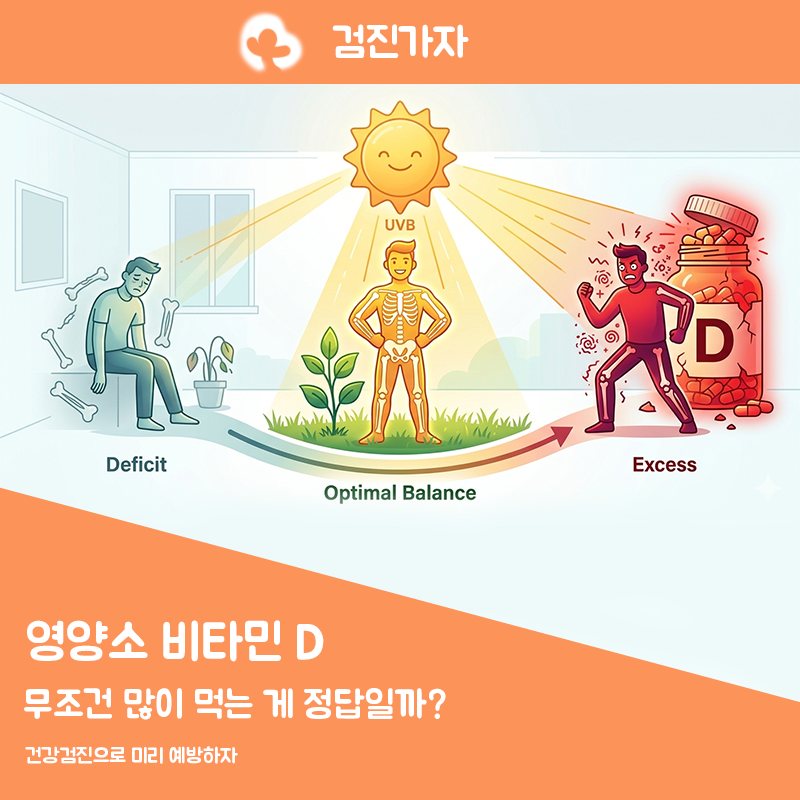
Many people today are diagnosed with Vitamin D deficiency and find themselves contemplating supplements or injections.
I also visited a clinic to check my levels, and after being told I was deficient, I purchased a product and took it consistently until I was told my levels had returned to normal.
While statistics show that the majority of Koreans are in a state of Vitamin D insufficiency, many experts argue that the standard thresholds we currently use are set excessively high.
We have provided answers on whether you absolutely must take Vitamin D supplements or if there are natural ways to fill the gap.
Is a Vitamin D Level of 30 Truly the Threshold for Deficiency?
Generally, in clinical tests, a blood Vitamin D concentration of less than 30 ng/mL is classified as ‘insufficient,’ and less than 20 ng/mL is classified as ‘deficient.’
However, some medical experts point out that these standards are set too high.
Because the standards are based on the intake levels of the top 2.5% of healthy individuals, a ‘medicalization’ phenomenon is occurring where the vast majority of the population is categorized as patients.
In fact, one participant in an experiment recorded a level of 16.4 ng/mL but confirmed they could maintain excellent health through sunlight and food alone, without the need for supplements.
Sunlight: The Safest and Most Effective Way to Synthesize Vitamin D
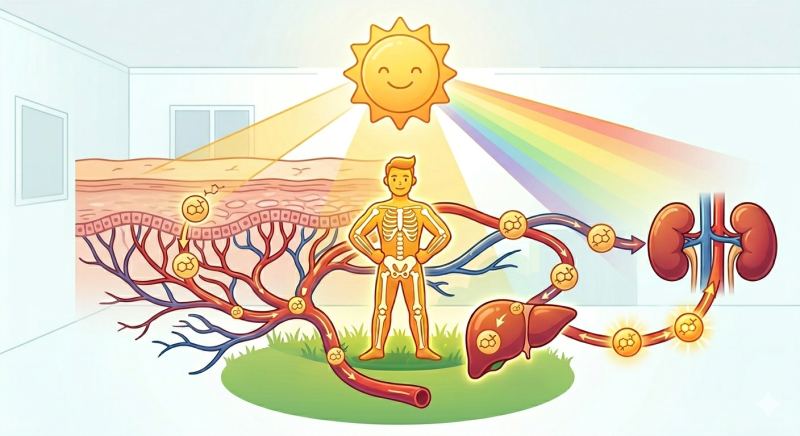
The amount of Vitamin D synthesized by the skin when exposed to sunlight (UVB) is far greater than the amount consumed through food.
UVB rays react with cholesterol in the skin to create Vitamin D3 precursors, which are then activated as they pass through the liver and kidneys.
The important thing to note is that sunlight passing through glass has its UVB rays blocked, meaning it does not help with Vitamin D synthesis.
Therefore, it is crucial to get direct sunlight outdoors.
If you are concerned about skin aging, apply sunscreen to your face and expose larger surface areas like your arms or legs for about 15 to 20 minutes a day.
The Dangers of Excessive Supplement Intake
Vitamin D is a fat-soluble vitamin that accumulates in the body.
If consumed in excess, calcium levels in the body can become too high, leading to toxicity symptoms such as kidney stones, gallstones, or muscle paralysis.
Unless you are a patient with osteoporosis or a specific immune disorder, improving lifestyle habits should take priority over the indiscriminate intake of high-dose supplements.
A 4-Week Experiment: Can Levels Rise with Only Sunlight and Diet?
A 4-week experiment was conducted with participants ranging from their 20s to their 70s.
After stopping supplements and practicing a routine of getting at least 30 minutes of sunlight a day and eating a Vitamin D-rich diet (such as blue-backed fish and mushrooms), the Vitamin D levels of all participants rose significantly.
In particular, a participant with a severe deficiency saw their levels nearly double, showing the remarkable result of their parathyroid hormone levels normalizing as well.
In conclusion, while Vitamin D is essential for our body’s immunity and bone health, there is no need to rely solely on supplements.

With just a 15-minute walk and a balanced diet, our bodies are fully capable of producing Vitamin D on their own.
Why not start receiving the sun’s nutrients directly with a light walk starting today?
#VitaminD #VitaminDDeficiency #VitaminDBenefits #SupplementRecommendation #SunlightVitamin #Osteoporosis #ImmunityBoost #UVB #HealthManagement #HealthInfo #VitaminDLevels #BenefitsOfWalking #FatSolubleVitamin #VitaminToxicity #KoreanNutrition #DietManagement #HealthCheckup #GeomjinGaja #ImmuneSystemDisorders
Frequently Asked Questions
If my vitamin D level is below 30, do I unconditionally need to take supplements?
No, you don't necessarily have to take supplements. Some in the medical community point out that the 30ng/mL standard is set too high. If you don't have specific conditions like osteoporosis, maintaining health with just sun exposure and dietary improvements can be sufficient.
Can vitamin D be synthesized from sunlight entering through a window indoors?
No, vitamin D is not synthesized from sunlight passing through a glass window. Ultraviolet B rays, which are necessary for vitamin D synthesis, cannot pass through glass, so you must go outdoors and expose yourself directly to the sun to get the effect.
What are the side effects of excessive vitamin D supplement intake?
Yes, side effects such as kidney stones or gallstones can occur. This is because the calcium concentration in the body becomes excessively high. Since vitamin D is a fat-soluble vitamin and accumulates in the body, it is best to avoid consuming high doses beyond what is necessary.
What is a safe way to get vitamin D from sunlight without skin aging?
It is recommended to apply sunscreen to your face and expose your arms or legs. Even just 15 to 20 minutes of direct sun exposure outdoors per day can synthesize enough vitamin D for your body, reducing concerns about skin aging.
Can I increase my vitamin D levels through diet alone without supplements?
Yes, you can increase levels by combining diet and outdoor activities. In fact, a 4-week experiment showed that participants who stopped supplements, consumed a diet rich in vitamin D like oily fish and mushrooms, and got more than 30 minutes of sun exposure daily saw a significant increase in their levels.