2026-05-29
Thought It Was Just Constipation? The Golden Time to Save the Anus from Rectal Cancer
Learn about rectal cancer symptoms, the difference between hemorrhoids and cancer, and the importance of early detection through colonoscopy to preserve anal function.
Hello,
This is Gunjin Gaja.
Today, we are going to take an in-depth look at a disease that many people easily mistake for simple indigestion or constipation and leave untreated, yet significantly impacts quality of life: Rectal Cancer.
From the symptoms of rectal cancer to stoma management after surgery, we have summarized the essential health information you need to know.
The Body’s Dryer: The Role of the Large Intestine and Rectum
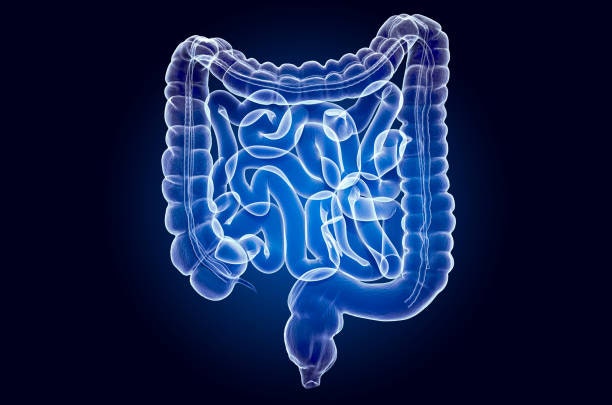
The large intestine in our body is about 1.5 meters long. It acts as a kind of ‘dryer’ that absorbs water and salt from food residue to make the stool firm.
Among its parts, the rectum refers to the final section of the large intestine, approximately 15 cm long. The name ‘rectum’ implies that it descends straight toward the anus. This area acts like a terminal station where stool is temporarily stored before being excreted.
Rectal Cancer Symptoms Easily Mistaken for Simple Constipation
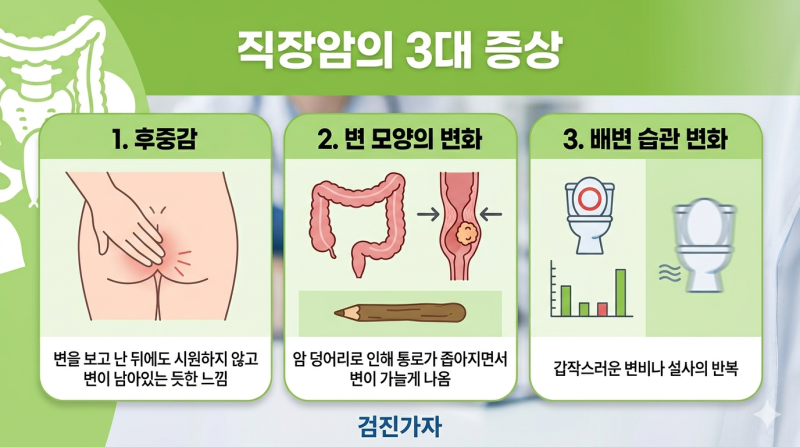
Rectal cancer is often called a ‘silent cancer’ because its early symptoms are not distinct. Many patients visit the hospital thinking they have constipation, only to be diagnosed with rectal cancer. Here are the three major symptoms of rectal cancer you should watch closely:
Tenesmus (Feeling of Incomplete Evacuation)
A feeling that stool remains even after having a bowel movement, leaving you feeling unsatisfied.
Changes in Stool Shape
As the cancer mass narrows the passage, the stool becomes thin.
Changes in Bowel Habits
Sudden onset of constipation or alternating bouts of diarrhea.
Bloody Stool: Hemorrhoids or Cancer?
Many people assume that blood in their stool is just hemorrhoids and ignore it. However, specialists advise that the nature of the bleeding is different.
Hemorrhoids (Piles/Fissures)
Mainly presents as bright, fresh red blood on the surface.
Rectal Cancer
The blood is often dark in color and mixed with sticky mucus.
While long-term hemorrhoids do not turn into cancer, it is difficult to distinguish between the two based on symptoms alone. Therefore, you must undergo a colonoscopy to identify the exact cause.
Can the Anus Be Saved? The Choice of a Stoma
The biggest concern in rectal cancer surgery is whether the anus can be preserved. If the cancer is too close to or has already invaded the anal sphincter, the anus must be removed for a complete cure. In such cases, an artificial anus (stoma) is created by connecting the end of the intestine to an opening in the abdomen to collect waste.
In the past, 30–40% of rectal cancer patients required a permanent stoma. However, with advancements in medical technology and robotic surgery, that rate has dropped to less than 10%. Additionally, ‘temporary stomas’ are frequently used, where the stoma is used only until the surgical site heals and is later reversed.
A New Life with a Stoma
Patients who undergo stoma surgery often feel a great sense of loss initially. However, once they become accustomed to its management, it does not significantly hinder daily life.
Many patients regain their health by accepting the stoma as part of themselves, walking 17,000 steps a day, and maintaining a plant-based diet. Please remember that social activities, including swimming and exercising, are fully possible even with a stoma bag!
Regular Checkups are the Answer
The cure rate for stage 3 rectal cancer in Korea is very high, reaching the late 70% range. However, the best treatment is prevention and early detection. Avoiding a meat-heavy diet, alcohol, and smoking is crucial. For those aged 50 or older (or earlier if there is a family history), getting regular colonoscopies is more important than anything else.
Gunjin Gaja supports your healthy tomorrow. If you are worried about booking a colonoscopy, find a reasonable and systematic checkup center through Gunjin Gaja!
#RectalCancer #ColonCancer #RectalCancerSymptoms
#Constipation #BloodyStool #HemorrhoidsVsCancer
#Colonoscopy #HealthCheckup #AnalResection
#Stoma #ArtificialAnus #StomaManagement
#ColonHealth #DigestiveDiseases #CancerPrevention
#RegularCheckup #GunjinGaja #ComprehensiveCheckup
Frequently Asked Questions
What are the early symptoms of rectal cancer?
Key symptoms include a feeling of incomplete bowel emptying, thinner stools, and changes in bowel habits. Rectal cancer is often called a silent cancer because its early symptoms are not distinct, but if you feel unsatisfied after a bowel movement or experience recurring sudden constipation and diarrhea, you should be suspicious.
How do bloody stools from hemorrhoids differ from those caused by rectal cancer?
You can distinguish them to some extent by the color and consistency of the bloody stool. Hemorrhoids typically involve bright red, clear blood, whereas rectal cancer often presents with dark, sticky, mucus-mixed blood. However, a colonoscopy is essential for an accurate diagnosis.
Do I always need an artificial anus (ostomy) if I undergo rectal cancer surgery?
No, not necessarily. With recent advancements in medical technology and robotic surgery, the rate of permanent ostomies has significantly decreased to less than 10%. An ostomy is only created if the cancer is too close to or has invaded the anal sphincter, and sometimes a temporary ostomy is performed for recovery.
Can I lead a normal life and exercise while wearing an ostomy bag?
Yes, it is entirely possible. Once you get used to managing it, there will be no significant hindrance to daily life, and you can comfortably engage in walking, swimming, and various social activities. Maintaining a positive mindset and a vegetarian-focused diet is beneficial for recovery.
How can I prevent rectal cancer?
Regular colonoscopy screening is the most reliable method for prevention and early detection. Especially if you are over 50 or have a family history, you must get screened, and avoiding a meat-centric diet, alcohol, and smoking in daily life greatly helps prevent rectal cancer.