2026-05-29
Summer Stroke: More Dangerous Than Winter? 5 Warning Signs Your Blood Vessels Are Sending
Learn why summer strokes are dangerous, the 5 critical warning signs, and the 4.5-hour golden time to save lives.
Hello,
This is Geomjin Gaja.
The weather has suddenly fluctuated between hot and cold lately.
Today, we want to take a deep look into cerebrovascular disease—one of the most critical yet often overlooked aspects of health management.
Many people believe that strokes or cerebral infarctions are only a risk during the cold winter months when the wind is biting.
However, experts warn that summer can actually be more dangerous than winter.
We have summarized the reasons why, along with the essential warning signs and emergency response steps you must know.
Why is cerebral infarction more dangerous in summer?
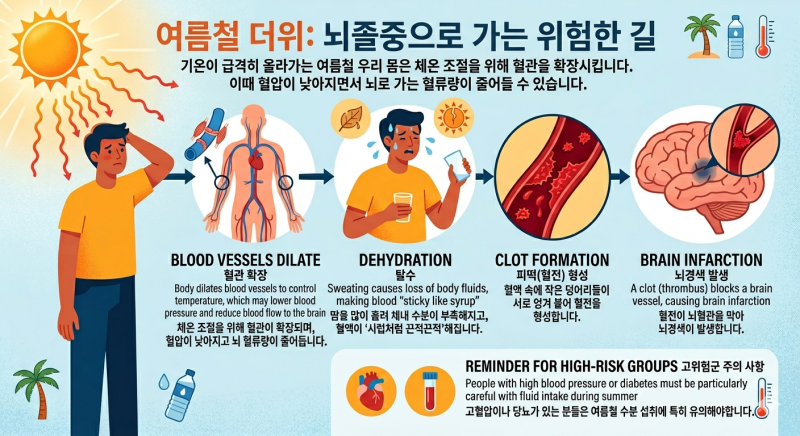
During the summer, when temperatures rise sharply, our bodies dilate blood vessels to regulate body temperature.
This can lead to a drop in blood pressure, which may reduce the blood flow reaching the brain.
An even more serious cause is dehydration. When the body lacks fluids due to excessive sweating, the blood becomes thick and sticky, like syrup.
If a blood clot (thrombus) forms and blocks a cerebral vessel, a cerebral infarction occurs immediately.
This is why individuals with high blood pressure or diabetes must be particularly careful about their fluid intake during the summer.
5 Major Stroke Symptoms You Must Remember
While a stroke may seem to strike without warning, our bodies are constantly sending out signals.
If even one of the following symptoms appears, you must head to the emergency room immediately.
Hemiplegia: Weakness or numbness in one arm or leg.
Speech Impairment: Slurred speech or difficulty understanding what others are saying.
Visual Impairment: Loss of vision in one eye or seeing double (diplopia).
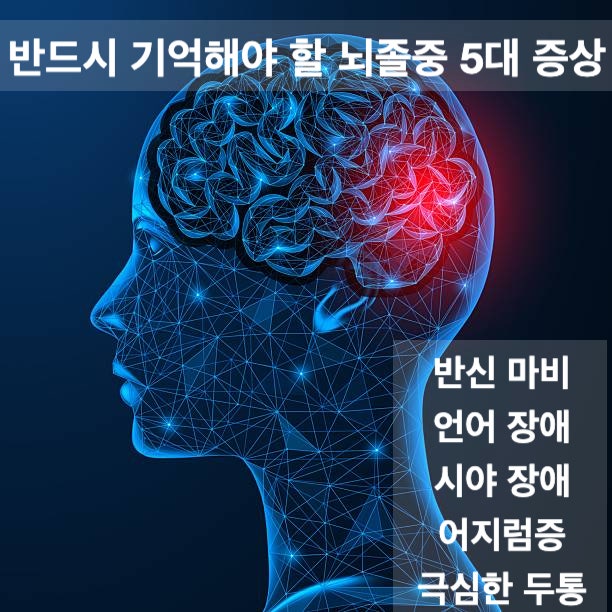
Dizziness: Severe dizziness to the point where it is difficult to maintain balance.
Extreme Headache: An intense pain never felt before, as if being hit by a hammer.
‘It’ll pass in a moment, right?’ The Trap of Transient Ischemic Attack (TIA)
About 30% of stroke patients experience a ‘Transient Ischemic Attack,’ where symptoms appear and then magically disappear within an hour.
Many people dismiss it as simple fatigue, but this is the final warning before a major storm hits.
Statistically, a significant number of patients who experience these symptoms suffer a real cerebral infarction within a week.
The 4.5-Hour Golden Time: The Line Between Life and Death
Brain cells die rapidly if the blood supply is cut off for even a few minutes.
You must arrive at the hospital within 4 hours and 30 minutes of the onset of a cerebral infarction to receive intravenous thrombolytics to clear the vessel.
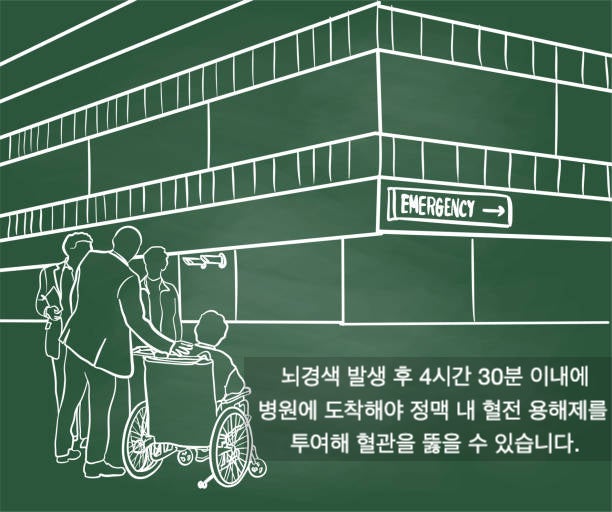
If a major vessel is blocked, a procedure to manually remove the clot is required within 6 hours.
‘I’ll be fine after a nap’
You must keep in mind that this thought can lead to a lifetime of disability.
Cerebrovascular Management in Daily Life
Lifestyle Habits: Smoking doubles the risk of stroke, and uncontrolled high blood pressure increases it by up to five times.
Quitting smoking is essential, and more than two drinks of alcohol a day becomes a poison.
Dietary Management: Consume unsaturated fatty acids (blue-backed fish, nuts) that clean the blood vessels, and avoid processed foods or soups high in sodium.
Self-Diagnosis: Hold both arms straight out in front of you for 30 seconds. If one arm droops or the palm flips over, an immediate examination is necessary.
Prevention is the best cure for cerebrovascular disease, but when it occurs, time is life.
Please share this information with your family and have a healthy summer!
▼ For comprehensive checkups including carotid ultrasound, visit KMI Yeouido ▼

▼ For KMI Yeouido reservation inquiries ▼
(Tel: 1600-2137)

#Stroke #CerebralInfarction #CerebrovascularDisease
#HealthManagement #SummerHealth #StrokeWarningSigns
#GoldenTime #HypertensionManagement #Diabetes
#VascularHealth #StrokePrevention #SelfDiagnosis
#FirstAid #BloodClot #Arteriosclerosis
#CarotidUltrasound #HealthCheckup #GeomjinGaja
#HealthInformation #Paralysis #ParentsHealth
Frequently Asked Questions
Why does cerebral infarction occur more frequently in summer?
Yes, dehydration and low blood pressure in summer are the main causes. When you sweat a lot and your body lacks water, your blood becomes sticky, making it easy for blood clots (thrombi) to form. Also, blood vessels expand to regulate body temperature, which reduces blood flow to the brain, increasing the risk of cerebral infarction.
What are the typical symptoms of a stroke?
Five typical symptoms are hemiplegia, speech disorder, visual impairment, dizziness, and severe headache. If you experience weakness in one side of your limbs, slurred speech, double vision, or a headache of an intensity you've never experienced before, you should go to the emergency room immediately.
Can I be relieved if stroke symptoms appear and then quickly disappear?
No, you should never be relieved. Symptoms that disappear within an hour are called transient ischemic attacks, which are the last warning signs before a real cerebral infarction occurs. A significant number of patients who experience these symptoms suffer a cerebral infarction within a week, so you should get tested immediately.
What is the golden time for cerebral infarction treatment?
The golden time is within 4 hours and 30 minutes after the onset of cerebral infarction. You must arrive at the hospital within this time to receive intravenous thrombolytics to open the blocked blood vessels. If a large blood vessel is blocked, you must undergo a procedure to directly remove the thrombus within 6 hours.
Is there a simple self-diagnosis method for stroke that can be done at home?
Yes, there is a method of holding both arms straight out in front of you. If you hold both arms out for 30 seconds and one arm droops or your palm turns over, it could be a sign of a problem with your cerebral blood vessels, so immediate medical examination is necessary.