2026-09-13
BCG Vaccine: Intradermal vs. Percutaneous Complete Comparison (Cost, Scarring, and Side Effects)
A comprehensive comparison of intradermal and percutaneous BCG vaccines for newborns, covering differences in costs, scarring, normal side effects, and guidance on how to choose the right option.

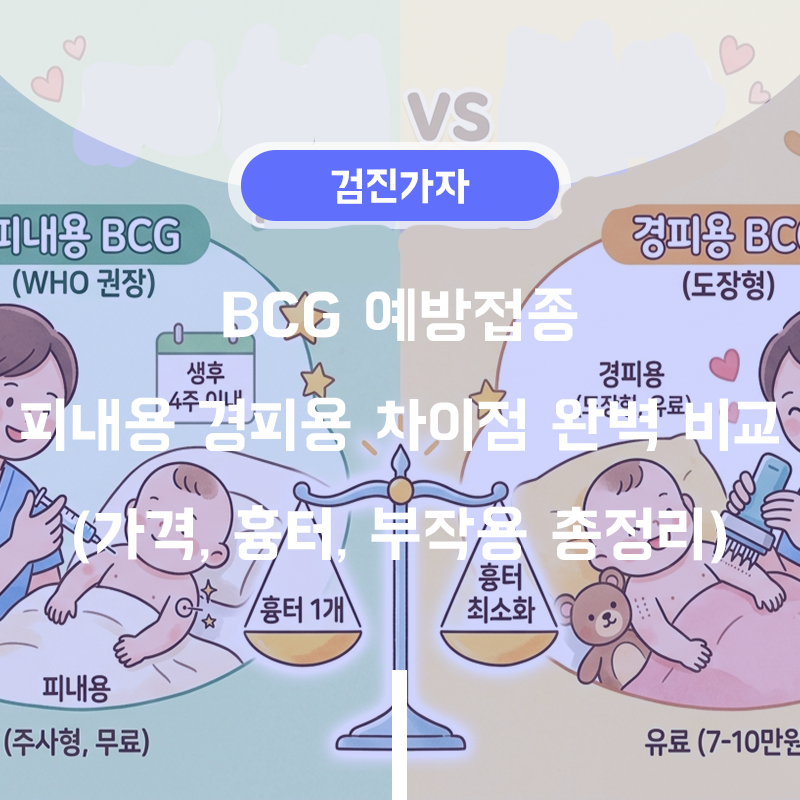
Hello!
This is Geomjin Gaja.
Welcoming a new baby into the world and helping them adjust is busy enough,
so keeping up with their vaccination schedule can feel overwhelming, right?
Especially when it comes to their very first immunization puzzle:
the BCG (tuberculosis) vaccine!
For new parents struggling to choose between
the intradermal and percutaneous methods,
we have summarized everything you need to know.
Parents often deliberate heavily between these two options,
and in practice, the split is almost 50/50.
Let’s walk through the entire process,
from decision-making to post-vaccination care!
Even the administration tools look different—how do they compare?
Intradermal BCG (Traditional Needle Injection)

How is it administered?
A precise dose of the vaccine is injected
directly into the shallow layer of the skin using a needle.
What is the cost?
100% government-funded! It is completely free.
(Available at public health centers and designated pediatric clinics.)
Pros
As the standard method recommended by the World Health Organization (WHO),
it delivers a precisely measured and consistent dose.
Cons
It may leave a single, firm scar on the shoulder,
and booking an appointment at public health centers can be competitive.
Percutaneous BCG (Stamp-Type Injection)

How is it administered?
The vaccine solution is applied onto the skin,
and a 9-needle device is firmly pressed
twice (leaving a total of 18 tiny punctures).
What is the cost?
Unfortunately, it is not covered by national insurance and must be paid out-of-pocket.
(Typically ranges between 70,000 KRW and 100,000 KRW.)
Pros
The scars heal into faint, dot-like marks that are less noticeable,
and it can be easily scheduled at regular pediatric clinics.
Cons
The absorbed dosage can vary slightly
depending on the infant's skin condition and the applied pressure.
Is it normal to see pus or lumps after vaccination?

Around 2 to 4 weeks after the injection,
the site may become red,
and a small pus-filled pustule may appear.
Parents often panic when they see this,
but it is actually a completely normal sign
that your baby's immune system is building protection properly!
Never squeeze the pus or cover it with an adhesive bandage;
simply keep the area clean and exposed to air.
(However, if a large lump forms in the armpit
or the discharge is severe, consult a pediatrician promptly!)
Quick Selection Guide
"I want the standard, WHO-recommended method at zero cost!"
Choose Intradermal!
"I want to minimize scarring and schedule on a flexible date!"
Choose Percutaneous!
In reality, both vaccines provide
equally excellent protection against tuberculosis,
so you can confidently choose based
on your family's personal preferences.
Most importantly,
ensure the vaccine is administered within the first 4 weeks after birth!
Don't worry too much about your baby's first vaccination—everything will go smoothly!
Cheering on all the new moms and dads out there!
Frequently Asked Questions
What is the cost difference between intradermal and percutaneous BCG?
The intradermal vaccination is 100% government-funded and free of charge at public health centers and designated pediatric clinics. The percutaneous (stamp-type) vaccination is non-reimbursable, typically costing between 70,000 KRW and 100,000 KRW at regular pediatric clinics.
Which method leaves less noticeable scarring?
The percutaneous vaccination leaves less visible marks, healing as tiny, faint dots. In contrast, the intradermal method may leave a single, firm scar on the shoulder, whereas the 18 micro-punctures from the percutaneous stamp fade significantly over time.
What should I do if pus or a lump develops at the injection site?
Pus formation is a normal immune reaction. Between 2 and 4 weeks post-vaccination, redness and pustules can appear. Never squeeze the pus or cover the site with bandages; keep it well-ventilated and dry. Seek medical advice only if armpit lymph nodes swell significantly or drainage is excessive.
Is there any difference in vaccine efficacy between the two methods?
No, both intradermal and percutaneous vaccines offer equally high protective efficacy against tuberculosis. The only differences lie in scarring patterns, costs, and appointment availability. The most critical factor is ensuring your baby receives the vaccination within 4 weeks of birth.
When is the recommended time frame for BCG vaccination?
The BCG vaccine should ideally be administered within the first 4 weeks after birth. Whether you choose the intradermal method (which may require advance booking at public health centers) or the percutaneous method, plan ahead to complete vaccination within this 4-week window.