2026-05-29
Scars That Never Fade: Actions You Must Never Take During a Burn Accident
Learn essential burn first aid, the dangers of low-temperature burns, and why you should never use ice or folk remedies on a burn injury.
Hello,
This is Geomjin Gaja.
In our daily lives, most of us have experienced a burn, whether large or small, at least once.
From spilling boiling ramen water to the surge of burn patients caused by the sticky, hot syrup during the Tanghulu craze, burns are a constant risk.
Though they lurk everywhere in our daily routines, it is easy to panic when an accident actually occurs. Today, we will take an in-depth look at burns.
Based on the advice of a professor specializing in burn surgery, let’s explore the dangers of burns and the correct way to respond.
Burns can strike anyone without warning.
Burns are not distant accidents. A 71-year-old may suffer full-body burns while boiling traditional tea, or an 11-month-old baby may pull a kettle cord and sustain severe injuries. Like gas explosions in restaurant kitchens, severe burn patients often find themselves in a life-or-death struggle.
‘It is no exaggeration to say we live in a world of heat every day,’ says the professor,
warning that a single moment of carelessness can lead to a lifetime of pain.
Why are the depth and surface area of a burn so important?
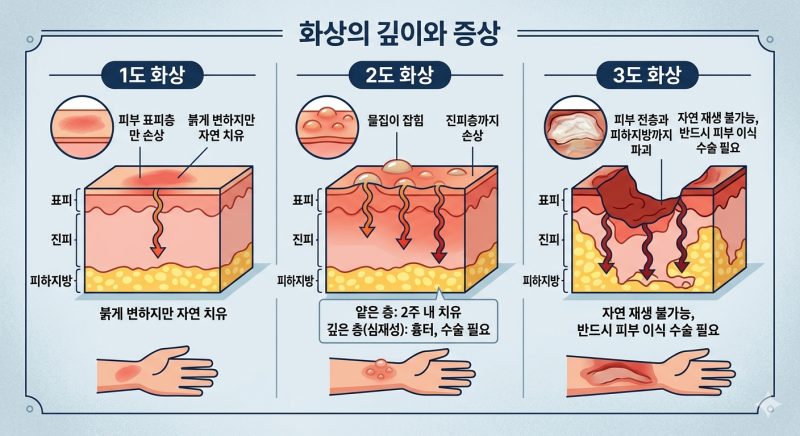
Burns are classified from 1st to 3rd degree based on the extent of skin damage.
1st-Degree Burn
Only the epidermis (outer layer) is damaged. The skin turns red but heals naturally.
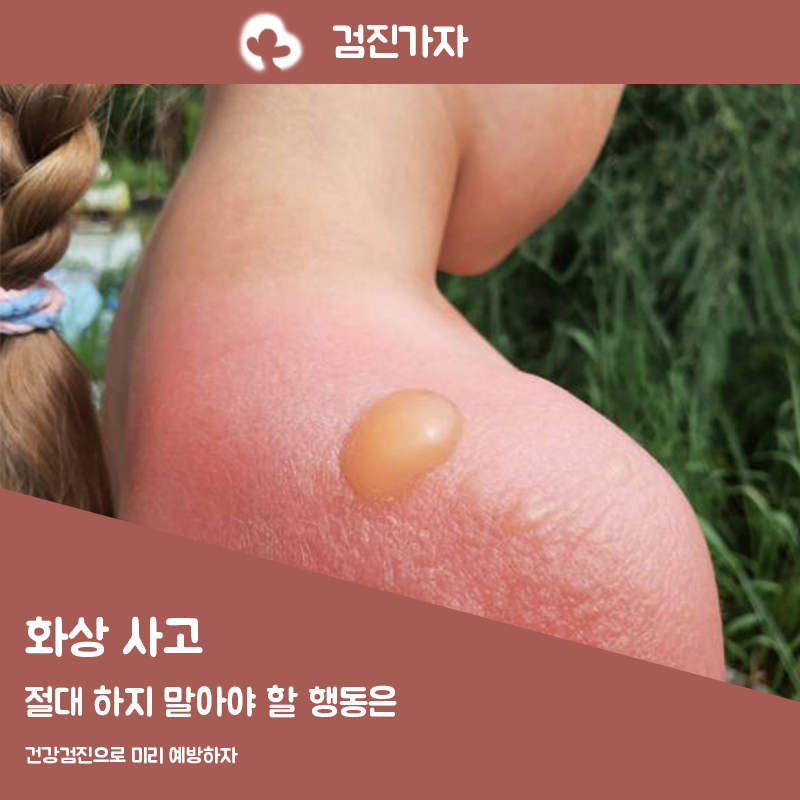
2nd-Degree Burn
Blisters form and the dermis (inner layer) is damaged. Superficial burns heal within two weeks, but deep (deep partial-thickness) burns leave scars and may require surgery.
3rd-Degree Burn
The entire skin layer and subcutaneous fat are destroyed. Natural regeneration is impossible, and skin graft surgery is mandatory.
The surface area is also critical. If more than 20% of the body is burned, it is classified as a severe burn, where the risk of infection and sepsis skyrockets.
When the skin—our body’s primary shield—is gone, bacteria can penetrate, causing organ failure and threatening life.
The terrifying trap of low-temperature burns
Burns aren’t only caused by roaring fires or boiling water. Prolonged exposure to even a mild temperature of around 40°C can cause low-temperature burns.
Sleeping with an electric blanket on or staying too long in a hot bath might feel pleasantly warm, but the skin proteins slowly denature, damaging deep tissues.
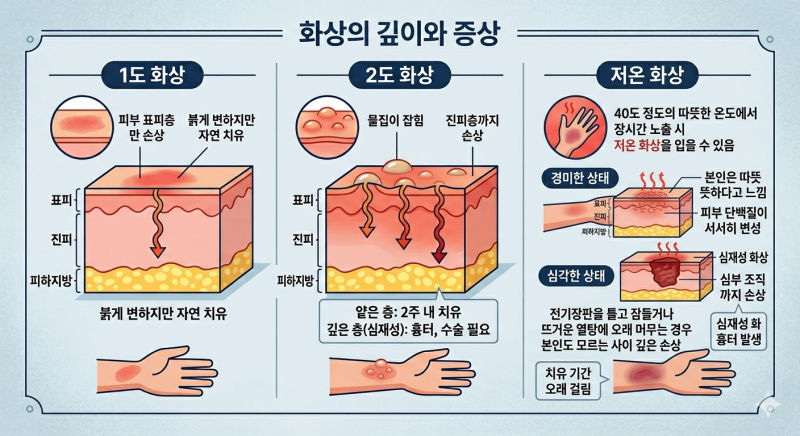
These occur frequently in the elderly, who may have dulled sensations, or in deeply sleeping infants, so extra caution is required.
Correct first aid and prohibitions during a burn accident
The first thing to do after an accident is to remove the heat source. Then, you must lower the temperature of the burned area with cool, running water. However, there are critical points to remember.
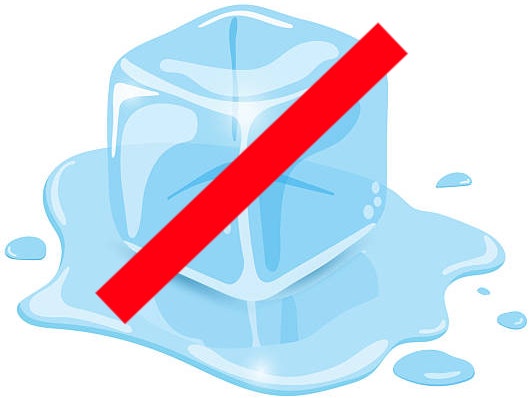
Ice is strictly forbidden
Extremely cold ice can constrict blood vessels and worsen the wound.
No folk remedies
Pouring alcohol or applying soybean paste only increases the risk of infection.
Protect blisters
Blisters act as a ‘natural dressing’ that prevents bacterial infection. Do not pop them yourself; seek professional medical help.
A battle beyond treatment: Rehabilitation and scar management
Burn treatment does not end when the wound closes. If ‘contracture’ occurs—where the skin at the burn site shrinks—it becomes difficult to move joints.
To prevent this, consistent rehabilitation and massage are essential. Furthermore, thorough moisturizing is necessary to aid skin regeneration, requiring strong willpower from both the patient and their family to endure the long battle against scarring.
Burns leave not only physical pain but also emotional scars.
#BurnAccident #FirstAid #BurnSurgery #LowTempBurn #3rdDegreeBurn #SkinGraft #BurnScar #ElectricalBurn #Scald #ParentingTips #SafetyPrevention #BurnTreatment #Rehabilitation #SkinHealth #Moisturizing #DailySafety #HealthInfo #BurnHospital #HealthCheckup #GeomjinGaja
Frequently Asked Questions
When burned, can I cool the heat with ice?
No, using ice is absolutely forbidden. Applying ice directly to the burned area can constrict blood vessels and worsen the injury. Instead of ice, use cool running water to gradually lower the temperature of the burned area; this is the correct first aid method.
Is it good to burst blisters caused by burns?
No, blisters should not be burst arbitrarily. Blisters caused by burns act as a natural dressing to prevent bacterial infection. Bursting them arbitrarily increases the risk of secondary infection, so they should be left intact and you should visit a hospital promptly for professional treatment.
Can I get burned even if I sleep with an electric blanket on?
Yes, you can suffer low-temperature burns. Even at a warm temperature of around 40 degrees Celsius, prolonged exposure of the skin can slowly denature proteins and damage deep tissues. Special caution is needed, especially for the elderly with dull senses or infants and toddlers who are in deep sleep.
Can third-degree burns heal naturally?
No, third-degree burns cannot regenerate naturally. Since it is a severe condition where the entire skin layer as well as the subcutaneous fat is destroyed, skin graft surgery is absolutely necessary. If more than 20% of the body is burned, the risk of infection and sepsis increases rapidly, so immediate emergency treatment is essential.
How should I manage a burn wound after it has healed?
Consistent rehabilitation treatment and thorough moisturizing care are necessary. If contracture occurs, where the skin in the burned area shrinks, it can become difficult to move joints. To prevent this, massage and rehabilitation should be combined, and moisturizing should be emphasized to aid skin regeneration.