2026-05-29
3 Reasons Why Housewives in Their Late 40s Must Get an Abdominal Ultrasound Even Without Pain
Discover why abdominal ultrasounds are essential for women in their late 40s, even without symptoms, to detect silent conditions like fatty liver and gallstones early.

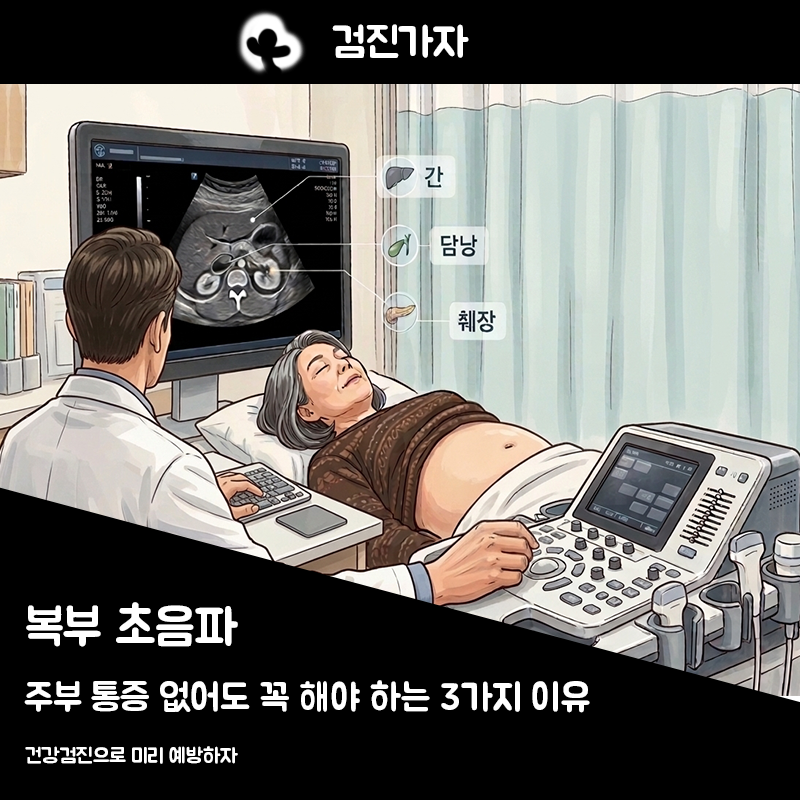
Hello,
This is Gunjin Gaja.
For housewives in their late 40s who live busier lives than anyone else, balancing family and work,
this is one of the most common concerns shared at the hospital.
‘I don’t feel any discomfort, do I really need an abdominal ultrasound?’ A silent warning for women in their late 40s.
When visiting the hospital,
an abdominal ultrasound is often recommended.
However, many think,
‘I don’t have any particular pain and my digestion is fine.’
‘Do I really need to spend money on this test?’
When there are no specific symptoms, it is easy to dismiss it, thinking ‘everything must be fine.’
But for women in this age group, an abdominal ultrasound means more than just a simple check-up.
Today, let’s explore why getting tested ‘when there are no symptoms’ is the wisest choice.
The Late 40s: A Time When ‘Silent Organs’ Send Signals
Our abdomen houses vital organs essential for life, such as the liver, gallbladder, pancreas, kidneys, and spleen.
The problem is that these are known as ‘silent organs.’
In particular, the liver and pancreas often do not show specific pain or self-perceived symptoms until 70–80% of their function is damaged.
The late 40s is also the beginning of menopause, a period where metabolism changes rapidly and hormonal imbalances begin.
Microscopic tumors, stones, or fatty liver that develop during this time grow quietly without pain.
Consequently, by the time someone visits the hospital because they feel discomfort, it is often too late for optimal treatment.
Changes in Female Hormones and Abdominal Health
The reason abdominal ultrasound is even more critical for housewives in their late 40s is due to changes in female hormones.
As estrogen levels fluctuate ahead of menopause, the way fat is stored in the body changes.
While fat used to be primarily subcutaneous (under the skin), visceral fat—which accumulates between organs—increases rapidly.
This raises the risk of non-alcoholic fatty liver disease and gallstones.
Gallstones, in particular, occur frequently in women in their 40s.
Since early symptoms are easily mistaken for simple indigestion, it is safer to check in advance through a precise ultrasound examination.
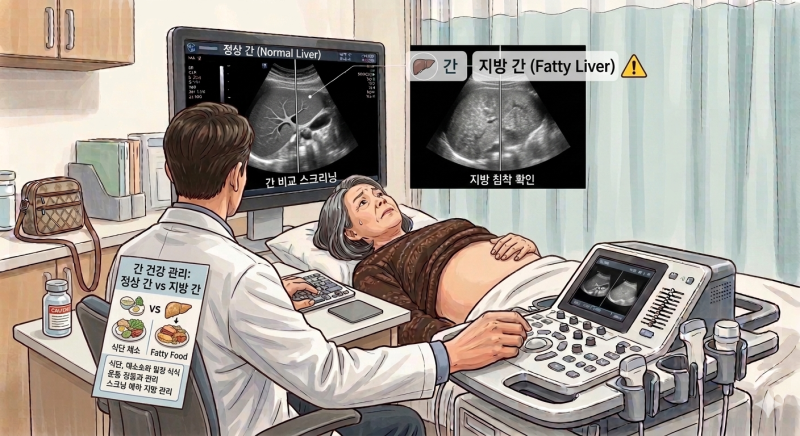
What Can Be Detected with an Abdominal Ultrasound?
Abdominal ultrasound is a very safe test that allows for real-time observation of organ structures without the worry of radiation exposure.
Through this test, the following conditions can be detected early:
Liver
Early detection of fatty liver, cirrhosis, hepatic cysts (water blisters), and liver cancer.
Gallbladder and Bile Ducts
Gallstones, gallbladder polyps, and bile duct dilation.
Pancreas
Pancreatitis and pancreatic cystic diseases. (Because of its location, the pancreas is difficult to detect, making ultrasound a vital primary screening tool.)
Kidneys
Kidney stones, renal cysts, and kidney cancer.
Why Having No Discomfort is the Greatest Stroke of Luck
Many people say they will get tested when it hurts, but medically, the best timing for a check-up is when there are no symptoms at all.
Polyps or lumps discovered when there are no symptoms are usually small and have a good prognosis.
This is because they can often be fully cured through simple follow-up observations or minor procedures.

Conversely, once visible symptoms such as abdominal pain, jaundice, or rapid weight loss appear, there is a high probability that the disease has already progressed significantly.
We must remember that protecting your health while you are still healthy is far more beneficial, both economically and psychologically.
The strength to care for your family starts with your own health.
Housewives often become desensitized to the small signals their bodies send because they are so focused on managing their family’s diet and health.
However, the late 40s is a health inflection point that determines the next 30 to 40 years.
If you have been recommended an abdominal ultrasound at the hospital, why not view it as the most reliable insurance for yourself rather than an unnecessary expense?
The 15 minutes or so you spend lying on the examination table will serve as a sturdy shield protecting your precious daily life for a long time.
Be grateful that you feel no discomfort right now, and we encourage you to willingly undergo the examination to maintain that peace of mind.
▼ Comprehensive Check-up Including Abdominal Ultrasound at Affordable Rates: Jin Health Check-up Center ▼

▼ For Inquiries Regarding Jin Health Check-up Center Reservations ▼
(Tel: 1600-2137)

▼ Interested in More Comprehensive Check-up Events? ▼

#HealthCheckup #AbdominalUltrasound #40sHealth
#HousewifeHealth #MiddleAgedWomenHealth #FattyLiver
#Gallstones #PancreaticHealth #LiverHealth #MenopauseHealth
#CheckupMoreImportantThanVaccination #LoveYourBody
#NoSelfDiagnosis #RegularCheckup #GunjinGaja
#WomensHealthInfo #ComprehensiveCheckup #HealthManagement
#DiseasePrevention #VibrantOldAge #ComprehensiveExam
Frequently Asked Questions
Should I get an abdominal ultrasound even if I don't have any pain?
Yes, it is best to get tested when you have no symptoms. This is because abdominal organs such as the liver and pancreas are 'silent organs' that do not cause pain until 70-80% of their function is damaged. By the time symptoms appear, the disease is often already advanced, so regular check-ups are necessary for early detection.
Why is an abdominal ultrasound particularly important for women in their late 40s?
This is because visceral fat rapidly increases due to changes in female hormones. As estrogen levels change before menopause, fat accumulates between organs, significantly increasing the risk of non-alcoholic fatty liver disease or gallstones, making ultrasound examination important for confirmation.
What diseases can be detected with an abdominal ultrasound?
Various diseases of the liver, gallbladder, pancreas, and kidneys can be detected early. Specifically, fatty liver, liver cancer, gallstones, gallbladder polyps, pancreatitis, and kidney stones can be safely checked in real-time without concerns about radiation exposure.
Are there any diseases that women in their 40s can suspect if they experience indigestion?
Yes, gallstones can be suspected. Gallstones, which frequently occur in women in their 40s, are easy to misunderstand because their initial symptoms are similar to simple indigestion. Therefore, if you have indigestion, it is safer to check the condition of your gallbladder in advance through a detailed abdominal ultrasound.