2026-05-29
Coffee for Fatigue Can Be Poison: The Reality of Caffeine Addiction Revealed by Brain Waves
Discover how excessive caffeine affects your brain waves and nervous system, and learn a 3-week solution to overcome addiction for true vitality.

Hello,
This is Geomjin Gaja.
I drank coffee again today...
When I was younger, I wondered why people drank it,
but at some point, coffee started to taste delicious.
For modern people, coffee has become
an inseparable part of life.
From the morning coffee that wakes you up
to the palate cleanser after lunch,
and even as the energy source
that helps you survive overtime.
But did you know that
this coffee we drink mindlessly
might actually be
slowly damaging our brains?
Through the story of someone addicted to caffeine
who drinks more than 10 cups a day,
let’s look at how caffeine affects
our bodies and brains,
the process of overcoming it,
and what constitutes a healthy coffee habit.
Is the coffee I drink energy or an addiction?
The subject of our case study brews coffee
as soon as they open their eyes and prepares
so that they never run out of coffee when going out.
They even pour coffee like ‘combat fuel’
to increase work concentration.
However, experts warn that this is
a clear case of addiction.
Caffeine is
a strictly addictive substance that
stimulates the brain’s pleasure hormones
and overactivates the pleasure centers.
If you experience headaches when you don’t drink coffee (withdrawal)
and find yourself needing to drink more over time
to feel the effects (tolerance),
your brain is already being
dominated by caffeine.
The shocking impact of caffeine on the brain
The impact of coffee—which we thought
simply chased away sleep—on brain waves
and the nervous system was significant.
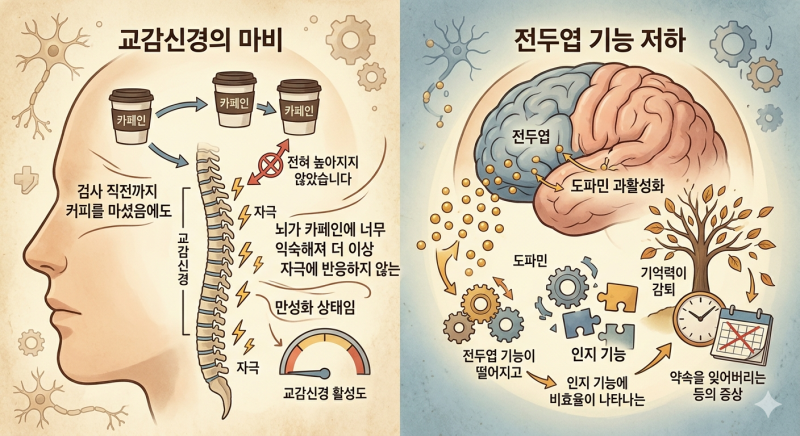
Paralysis of the Sympathetic Nervous System
Even though the subject drank coffee
right before the test,
their sympathetic nervous system activity
did not increase at all.
This means
the brain has become so accustomed to caffeine
that it is in a chronic state where it
no longer responds to the stimulus.
Decline in Frontal Lobe Function
Brain wave tests showed
that due to dopamine overactivation,
frontal lobe function decreased,
and inefficiencies in cognitive function were observed.
This is also why symptoms such as
memory loss or forgetting appointments occur.
A 3-week solution to escape caffeine addiction
To treat caffeine addiction, experts
recommended ‘severance’ rather than ‘moderation.’
Quitting all at once, much like quitting alcohol,
is more effective for resetting
the brain’s addiction circuits.

Action Solutions
Use Alternative Beverages
To trick the brain, which enjoys
the act of drinking coffee itself,
replace it with barley tea or
caffeine-free herbal teas.
Organize Your Environment
If you see it, you’ll want to drink it.
Boldly remove the coffee machine
and capsules from your home
to block the source of temptation.

Inform Those Around You
Declare to those around you, ‘I’ve quit coffee,’
so that others
won’t offer it to you.
Utilize Time Blocking
Divide your time into specific blocks,
plan your day, and correct it
along with other bad habits
like smartphone addiction.
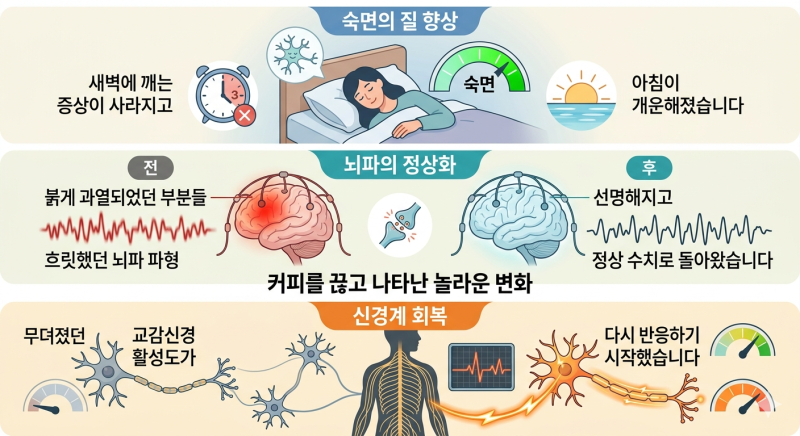
Amazing changes after quitting coffee
With just three weeks of effort,
the body responded honestly.
Improved Sleep Quality
The symptom of waking up at dawn disappeared,
and mornings became refreshing.
Normalization of Brain Waves
The blurred brain wave patterns became clear,
and the parts that were ‘overheated’ in red
returned to normal levels.
Recovery of the Nervous System
The dulled sympathetic nervous system activity
began to respond again.
‘I’ll sleep long enough in my coffin when I die anyway, so I should work while I’m awake.’
The words of the subject, who saved on sleep
and relied on coffee, closely resemble
the lifestyle of many modern people.
However, activities not supported by
a healthy brain and body
will eventually just eat away at you.
Is your day
energetic even without coffee?
If your daily routine collapses
without coffee,
now is the time to
listen to your body’s voice.
Check your physical condition with regular health checkups through Geomjin Gaja,
break free from caffeine addiction,
and regain true vitality!
▼ To book a comprehensive health checkup easily and quickly ▼

▼ If you need to inquire about a comprehensive health checkup reservation ▼
(Tel: 1600-2137)

#GeomjinGaja #HealthCheckup #CaffeineAddiction
#CoffeeAddiction #CaffeineWithdrawal
#QuittingCoffee #BrainHealth #FrontalLobeFunction
#HowToGetDeepSleep #ChronicFatigue #Dopamine
#SympatheticNervousSystem #LifestyleImprovement #BarleyTeaBenefits
#TimeBlocking #SelfCare #Detox
Frequently Asked Questions
I get a headache if I don't drink coffee. Am I addicted to caffeine?
Yes, this is a typical withdrawal symptom of caffeine addiction. Caffeine is an addictive substance that stimulates the brain's pleasure center, so if you get headaches when you don't drink it, or if you need to drink increasingly larger amounts to feel its effects, it can be considered that your brain is already dominated by caffeine.
What negative effects does caffeine addiction have on brain health?
It can lead to decreased frontal lobe function and sympathetic nerve paralysis. Brainwave test results show that overactivation of dopamine can lead to reduced cognitive function and memory decline, and the brain becomes chronic to caffeine, resulting in a state where sympathetic nerve activity does not increase at all.
Is it better to gradually reduce coffee intake to quit?
No, complete cessation, not moderation, is necessary. Experts recommend quitting all at once, like quitting alcohol, as it is much more effective in resetting the brain's addiction circuitry.
What methods can I practice to quit coffee?
It is recommended to replace it with barley tea or caffeine-free tea. Additionally, it's good to remove coffee machines from sight to block temptation and declare to those around you that you've quit coffee to prevent suggestions.
What positive changes occur in the body when you quit coffee?
Even quitting for just 3 weeks significantly improves the quality of sleep. The symptom of waking up in the early morning disappears, making mornings refreshing, and blurry brainwave patterns become clear, and dulled sympathetic nerve activity begins to respond normally again.