2026-06-04
The Infinite Transformation of Gim, Seaweed, and Kelp: The World’s Final Superfood
Discover why seaweed is being hailed as the ultimate superfood, from its incredible nutritional profile to its role as a sustainable future food source.

Hello,
This is Geomjin Gaja.
I remember eating a lot of seaweed soup (miyeok-guk) since I was young because I loved it so much.
Gim (dried laver) has become a staple I can’t live without, and kelp (dasima) certainly plays a vital role in adding that deep umami flavor to dishes.
These days, people all over the world are falling in love with gim.
In the past, these ingredients were often overlooked in the West, sometimes even referred to as ‘sea weeds.’
Recently, however, the entire world has turned its attention to these ingredients, and people are finally lining up to eat them.
The stars of this story are the seaweeds we encounter every day.
Let’s take a closer look at the amazing benefits and future value of seaweed, the world’s final superfood.
Changing the Western Table
The perception of Westerners, who previously avoided seaweed due to its unique texture and scent, is undergoing a 180-degree shift.
In regions like the UK and Brittany, France, high-end dishes such as tartare, risotto, and pesto are already being showcased using gim, sea lettuce, and sea mustard.

In the United States, as Japanese cuisine has become mainstream, seaweed is being recognized as a health food. It has gained such popularity that dedicated sections are appearing in large supermarkets.
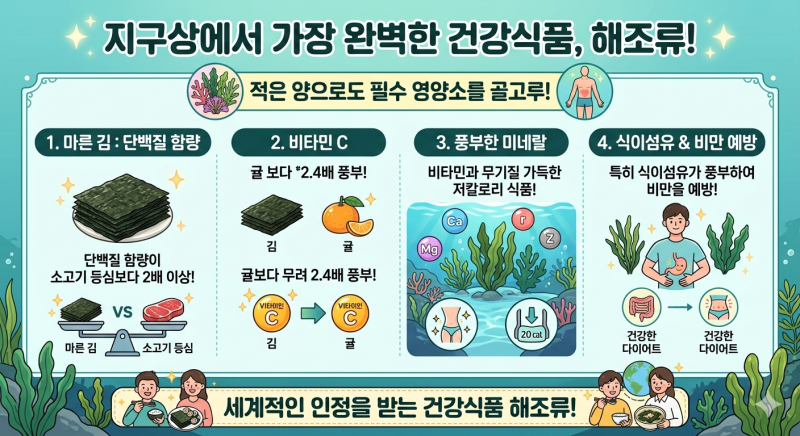
Nutritional Content Higher Than Beef Sirloin
Seaweed provides a well-balanced supply of essential nutrients our bodies need, even in small amounts.
- Dried Gim: Contains more than twice the protein content of beef sirloin.
- Vitamin C: Contains 2.4 times more Vitamin C than tangerines.
- Rich Minerals: A low-calorie food packed with vitamins and minerals.
In particular, it is rich in dietary fiber, which helps prevent obesity, and it is gaining global recognition as one of the most perfect health foods on Earth.
The Reversal of Fortune for Sea Mustard Spores and Maesaengi
Maesaengi (capsosiphon fulvescens), once considered a nuisance that interfered with gim farming, is now known to be excellent for treating anemia, osteoporosis, and hangovers.
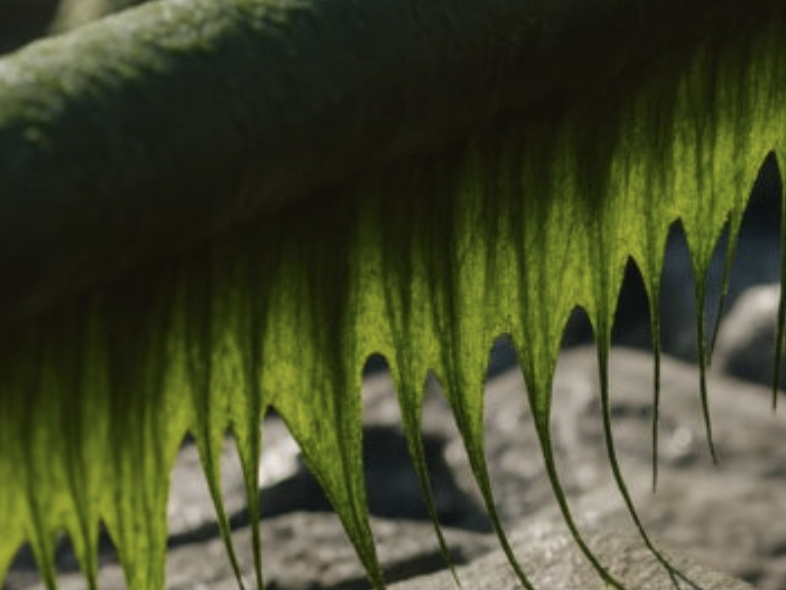
It has now become a top high-income crop. Additionally, the ‘miyeok-gwi’ (sea mustard spores), which used to be discarded for being thick and tough, has been found to contain large amounts of fucoidan, a substance that activates immune cells and reduces the side effects of cancer treatments.

Parts of seaweed that were once thrown away are now highly valued abroad as raw materials for high-value pharmaceuticals and cosmetics.
From Livestock Feed to Future Food
A livestock farm in France fed seaweed to its cows and found that diseases decreased, leading to a dramatic reduction in antibiotic costs.
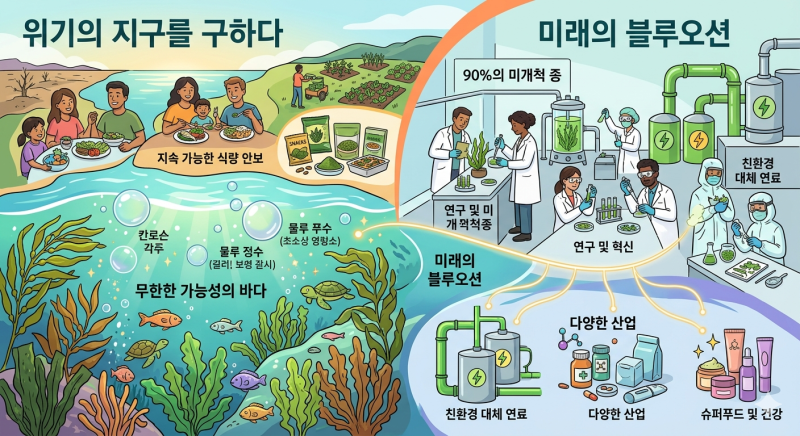
Seaweed purifies the Earth’s environment while serving as the most reliable and sustainable alternative to solve the worsening food shortage crisis.
Of the 7,000 species of seaweed worldwide, humans utilize less than 10%!
Seaweed, with its infinite possibilities, is the final superfood that will save a planet in crisis and a future blue ocean we must watch closely.
How about putting a healthy and delicious seaweed dish on your table today?
#Superfood #Seaweed #GimBenefits
#SeaMustardBenefits #KelpBenefits #Maesaengi
#Miyeokgwi #Fucoidan #SeaGrapes
#HealthyDiet #FutureFood
#ImmuneBoostingFood #CancerFightingFood
#ObesityPrevention #DetoxDiet #WellbeingFood
#SeaweedFeed #EcoFriendlyFood
Frequently Asked Questions
What is the protein content of dried seaweed?
Yes, dried seaweed has more than twice the protein content of beef sirloin. It also contains 2.4 times more vitamin C than tangerines, and is a low-calorie food rich in minerals and dietary fiber, making it very effective for health management, including obesity prevention.
What are the benefits of maesaengi (seaweed fulvescens) for our body?
Maesaengi is excellent for preventing anemia and osteoporosis, and for relieving hangovers. In the past, it was treated as a nuisance that interfered with seaweed farming, but now, with its excellent nutritional benefits becoming known, it is recognized as a high-income crop that the world is paying attention to.
What special ingredients are found in miyeokgwi (kelp root)?
Miyeokgwi contains a large amount of fucoidan, an ingredient that activates immune cells. This ingredient helps reduce the side effects of cancer treatment, and although it was once discarded for being thick and rough, it is now used as a valuable raw material for high-value-added medicines and cosmetics.
Can seaweed also be used as animal feed?
Yes, it can be used as a healthy feed that reduces animal diseases. In fact, a livestock farm in France fed seaweed to cattle, and as a result, animal diseases decreased, leading to the positive effect of significantly reducing antibiotic costs.