2026-05-29
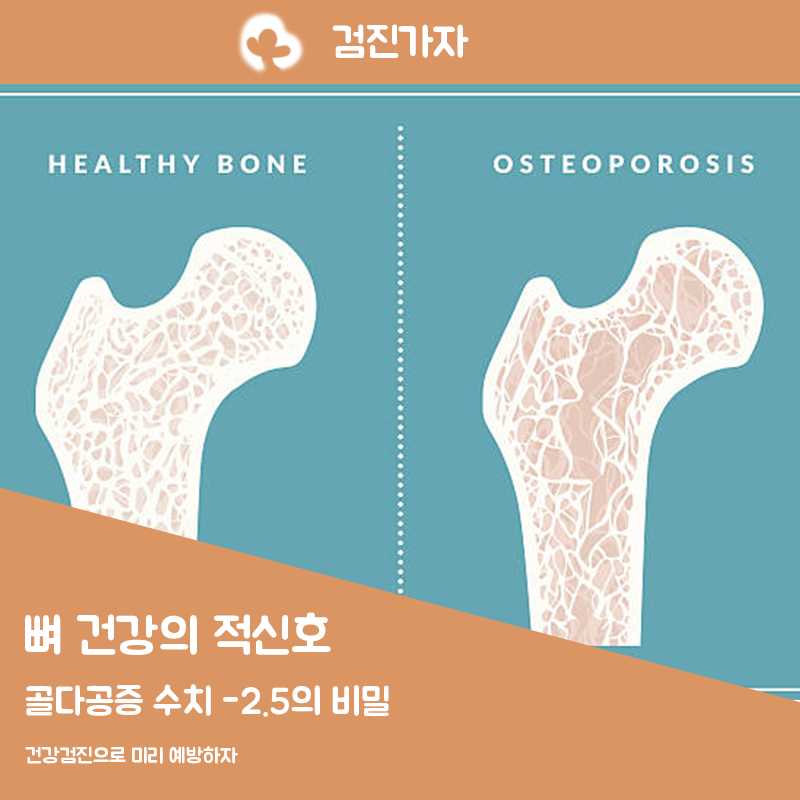
The Red Flag for Bone Health: The Secret Behind the Osteoporosis Score of -2.5
Understand your bone density results. Learn the difference between T-score and Z-score, and why -2.5 is the critical threshold for diagnosing osteoporosis.
Hello,
This is Geomjin Gaja, your comprehensive guide to health checkups.
As we age, one of the items on a health checkup that we start to worry about more is
bone health.
Especially for women,
bone density drops sharply after menopause,
making osteoporosis screening an essential part of the routine.
However, when you receive the results,
the complex graphs and numbers often lead to confusion:
‘So, are my bones strong or not?’
Have you ever felt frustrated like this?

Based on expert advice,
we have summarized the clear criteria for you to
analyze your osteoporosis report yourself.
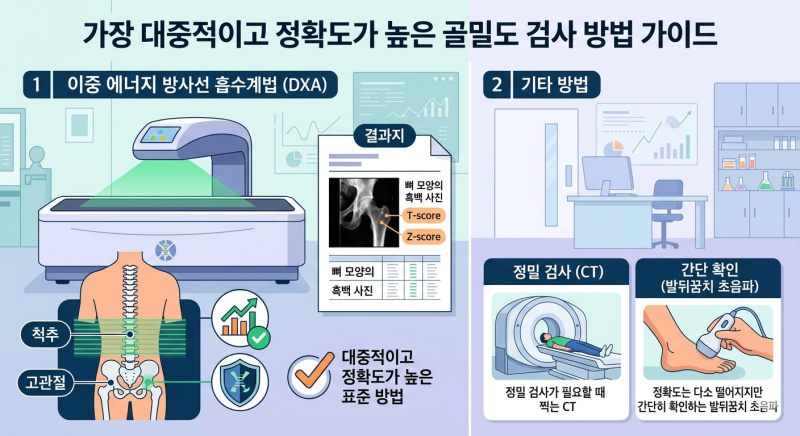
How is osteoporosis tested?
The most popular and accurate method used as the standard is
Dual-Energy X-ray Absorptiometry (DXA).
If your report shows black-and-white images of bones along with a list of numbers, it is this test.
DXA Method
It measures the spine and hip areas, offering high accuracy with low radiation exposure.
Others
There is CT scanning used when a more detailed examination is needed,
and the heel ultrasound method, which is simpler but slightly less accurate.
Key Results: T-score vs. Z-score—Which one should you look at?
The first things you will notice on the report are the T-score and Z-score.
T-score
(Most Important!)
This compares your bone density to the average value of a healthy young adult in their 20s or 30s.
It serves as the absolute standard for diagnosing and treating osteoporosis.
Z-score
This compares your value to the average of people in your own age group.
While it shows how you are doing for your age,
the T-score is much more accurate for determining fracture risk.
The Fear of Negative Numbers: The Threshold is -2.5!
Many people get scared when they see a minus (-) sign on their results.
The number you must remember here is -2.5.
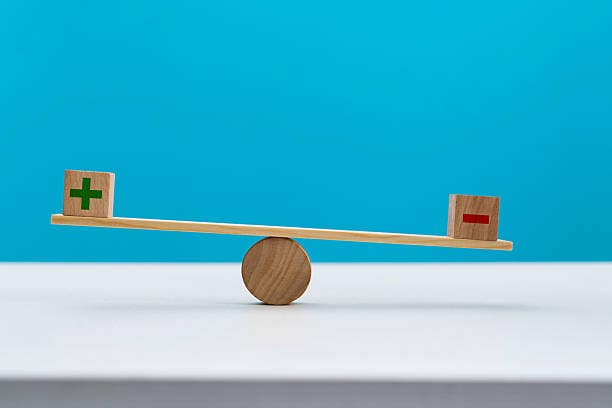
Normal
T-score of -1.0 or higher
Osteopenia
Lower than -1.0 but higher than -2.5
(Caution stage; requires diet and exercise management)
Osteoporosis
-2.5 or lower
(Subject to full-scale medication and intensive management)
If the score drops to -3.0 or lower,
it means you are in the bottom 0.14%—
essentially ranking 1st or 2nd from the bottom out of 1,000 people in terms of bone weakness.
If it goes past -4.0,
experts warn that bone strength is like a sponge, becoming so fragile that even a finger press could leave an indentation.
What if results differ by body part?
Usually, the lumbar spine (lower back) and the femur (hip) are measured,
and the scores may vary slightly between these areas.
Specialists determine the presence of osteoporosis and create a treatment plan
based on the area with the lowest score.
Why is managing osteoporosis so important?
Osteoporosis is often called the ‘silent killer’.
This is because there is no pain until a bone actually breaks.
However, if your score is -2.5 or lower, even a minor slip on your backside
can lead to a hip fracture,
which can drastically reduce the quality of life in old age.
A tip from Geomjin Gaja!
If you know your exact bone density score,
you can take proactive preventive measures instead of feeling vague anxiety.
If you are close to the -2.5 threshold,
increase your intake of calcium and Vitamin D,
and strengthen the muscles surrounding your bones through consistent resistance training.
If you want to find comprehensive checkups including osteoporosis testing at an affordable price,
▼ KMI Korea Medical Institute Gangnam ▼

▼ For KMI Gangnam reservation inquiries ▼
(Tel: 1600-2137)
▼ Curious about nationwide health checkup centers for a spring screening? ▼

#Osteoporosis #BoneDensityTest #HealthCheckup
#GeomjinGaja #OsteoporosisScore
#Tscore #Zscore #BoneHealth
#OsteoporosisResults #Osteopenia
#MenopauseHealth #SeniorHealth #FracturePrevention
#BoneDensityValue #VitaminD #Calcium
#HealthManagement #SelfCare
Frequently Asked Questions
How is osteoporosis screening performed?
We primarily use the most common and accurate method, dual-energy X-ray absorptiometry (DXA). It measures the spine and hip areas and is characterized by low radiation exposure. If necessary, CT or heel ultrasound methods may also be used.
What is the difference between T-score and Z-score in the test results?
The T-score compares your bone mineral density to that of a healthy young adult (20-30s), while the Z-score compares it to the average of people your age. The T-score is the absolute standard for diagnosing osteoporosis and assessing fracture risk.
What is the T-score criterion for diagnosing osteoporosis?
Osteoporosis is diagnosed when the T-score is -2.5 or lower. A T-score of -1.0 or higher is considered normal, and values between -1.0 and above -2.5 are classified as osteopenia, a cautionary stage. Below -2.5, active drug treatment and intensive management are required.
What if the bone density values for the waist and hip are different?
The presence of osteoporosis is determined based on the lowest recorded value among the measured areas. The specialist will diagnose the patient's condition and formulate a future treatment plan based on this lowest score.
What management is needed to prevent osteoporosis?
It is recommended to increase calcium and vitamin D intake and engage in regular strength training. Osteoporosis is a silent disease that causes no pain until a bone breaks, so it is important to actively prevent fractures by strengthening the muscles surrounding the bones.